The USA and Israel Fall Elections: Getting Out the Vote and Facing Challenges
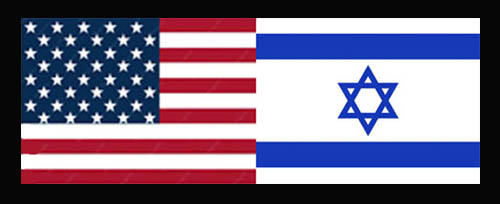
The United States and Israel have a lot in common right now, and it goes beyond the reality that both regimes are in the grip of fascist leaders. Trump and Netanyahu are out-of-control narcissists whose respective top priorities are themselves. Additionally, they are surrounded by sycophants and opportunists who are immoral.
And both countries are having elections this fall.
In America, there is a daily parsing of whether our midterms will be free and fair or if the process will be suppressed by a range of machinations. Trump’s Thursday, July 16, “address,” covering topics ranging from election security and foreign interference to relitigating the 2020 election, was as dysfunctional as expected. Average Americans are more concerned with gas and food prices, and their neighbors being shot dead in the streets by ICE agents.
Israel’s first election since October 7, 2023, will take place on October 27. Up for grabs are 120 Knesset member seats, with 61 needed to form a majority. Yes, their system is very different from ours and more difficult to grasp, given the format Americans are used to. There are over 10 parties in the running, people change coalitions, and the configurations are constantly in flux. Meanwhile, Netanyahu is looking into how his government can impact the influx of expats flying to Israel to cast their ballots.
However, in both nations, there are people on the ground laboring to change the equation. They refuse to throw their hands up in despair.
Well-known in the United States is the national leadership of Indivisible and the innumerable chapters it has spawned across the country. I belong to two local groups from which other sub-movements and strategies have sprung. One of the favored techniques for reaching out to voters is “deep canvassing,” a way of interacting with people that emphasizes bridging differences to connect with an empathy that disarms division.
So I was surprised when I tuned in to a recent Zoom hosted by Standing Together, which discussed the group’s role in Israel’s upcoming vital choice process and its commitment to the deep canvassing methodology. With close to 200 people on the call from the United States, England, Germany, France, and Israel, the conversation delved into how the alliance planned to reach out to Arab voters. The Standing Together tagline is, “Where there is struggle, there is hope.”
Moderator Sarah Goldberg from the Nazareth chapter spoke with Heli Mishael and Amin Amara. They related how the Standing Together movement has grown in the past 3 years, their work to “nurture Israeli-Palestinian solidarity,” their demand for the return of the hostages, how they organized aid into Gaza, and ending the war. The top takeaway was that “power is rooted in Arab-Jewish solidarity.”
Addressing the present situation, Mishael outlined, “People are dying every day” despite the “so-called cease fire.” She added, “The forever war hasn’t stopped.” The goal is to try to “push the public to recognize what’s going on.” Mishael underscored how the “cost of war is still fresh” and why it was essential to create an alternative that showcased a “concrete concept of peace.”
Amara, a Palestinian citizen of Israel who lives in the north, described his background from a non-political family. He was 13 years old during the 2005 Intifada. Amara’s goal was to become a lawyer. However, when the journalist Shireen Abu Akleh was killed in May 2022, he experienced it “as a transformation.” He put aside his plans. Now, he and Mishael are in the “secretariat” of the Standing Together leadership.
To build majority consensus, Standing Together has committed to an intensive Get Out the Vote (GOTV) effort, employing “serious deep canvassing” to gain a majority by “building emotional bridges so others see what they have in common with us.” At the heart is conveying the “underlying belief that people can change.”
Known as the “purple vests” for their protective presence (with the approval of Palestinian communities), they use their “Israeli privilege” because “It’s still not ok for the IDF to kill another Jew.” Heli related stories about the West Bank and emphasized, “They [the settlers] can’t be mainstreamed. They think they can do whatever they want because the army has their back,” she said.
Drilling down into the violence in Arab communities, Amin pointed out that the situation has been consistently ignored by the Israeli government. He noted, “175 people have been killed, with minimum indictments.” He said, “Jaffa police turn a blind eye to violence and crime in Palestinian neighborhoods.” He explained, “Our role is to be on the ground with Palestinian families who are victims of Arab-on-Arab violence.” He reiterated, “Jewish and Palestinian joint struggle is key.”
The bottom line of the talk was, “We have to go to the polls.” Heli insisted, “That’s how to bring about change in this moment. Will we end war forever or [have] more of the same?”
Standing Together leadership considers the most significant objective to be “getting out the vote in Palestinian sectors.” Amin related that “people don’t believe that change is possible.” He queried, “How can we convince Palestinians to vote? Arab society and Palestinian society need to believe they can change reality.”
With a strong presence in twelve cities, Standing Together has “a history with the Palestinian community.” The plan is to have 60,000 personal conversations. [One seat equals 30,000 votes.] The campaign is in Arabic, for Palestinians by Palestinians. Billboards with messages are part of the strategy. In Palestinian society, 80 percent of the population know Standing Together, and 60 percent have a positive impression of it.
Goldberg concluded, “Our job is to create action that will make people vote.”
In Israel and the United States, there are indications that cameras and police/ICE may be sent to specific polling sites to intimidate voters.
Resources:
Indivisible: Hands Off Our Vote
Deep Canvas Institute: Learn More
Standing Together GOTV: Help fund the Initiative
ACLU: Defending our Vote