Kate Nace Day: Fighting Sexual Trafficking as a Professor, Filmmaker, and Author
Explaining the genesis of her book, Day said, “I’m trying to memorialize what the average person should know about sex trafficking.”

Explaining the genesis of her book, Day said, “I’m trying to memorialize what the average person should know about sex trafficking.”
Under our national law, anyone under the age of 18 who is sold for sex is a trafficking victim. Consent is irrelevant. But in many states, prostituted children are still arrested and treated as criminals.
Girls Like Us presents a dual story thread. One is Lloyd’s personal narrative; the other is a primer on what trafficked American girls are up against.
The story’s trajectory follows Kathryn Bokovac from her discovery of trafficking corruption, complicity, and cover-ups through her efforts to report her findings—despite files of evidence disappearing and witness tampering.
On the buying of sex, Sakow said, “Where there’s men, there’s trafficking. It has nothing to do with religion.”
For every person who views a documentary, there is an exponential effect. They talk about it, they write about it, and sometimes they turn activist.”
Most of the local news stories gave little to no insight to the aspects of human trafficking apparent in this case, nor the prevalence of this activity on New York City streets.
Madeleine Albright’s most arresting comment was the analogy, “Women in a country are like the canary in the coal mine.”
Prominently featured in Fatal Promises is actress and activist Emma Thompson. In addition to making powerful public service announcements, Thompson is the co-curator (with Elena, a trafficking survivor), of the interactive art installation Journey. The work puts the viewer directly into the experience of a sexually trafficked woman.
Several story threads make up the narrative. In a chilling sequence, we see a videotape made by two young men who filmed their exploits as rising pimps, with hopes of snaring a reality show. The streets of New York City have never looked bleaker.

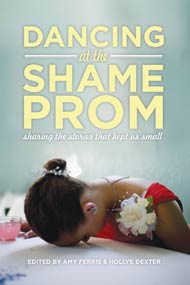
"The Jump Rope Line" by Marcia G. Yerman is included in the Seal Press anthology Dancing at the Shame Prom.
Published at: