2015 Climate Change Forecast
In the 2014 election, big campaign dollars from the fossil fuel sector reaped major benefits. Those who have been itching to cut the Environmental Protection Agency off at the knees now have a majority in both houses.

In the 2014 election, big campaign dollars from the fossil fuel sector reaped major benefits. Those who have been itching to cut the Environmental Protection Agency off at the knees now have a majority in both houses.
Individuals from all walks of life, who are concerned about the future of their children and the planet, are self-organizing within like-minded communities.
By the age of twenty, Schiele had found his voice and personal style.
The Brooklyn Museum prides itself on being in touch with the borough’s wide-ranging neighborhoods.
The need for an ongoing “dual identity,” as a means of survival for the adult black male, is a theme that repeatedly manifests itself in Adams’s work.
Peter Nightingale, a professor of Physics at the University of Rhode Island, informed me that the while the United States is only 5 percent of the world population, we have already used 25 percent of humanity’s carbon budget.
In a move that may make the “Cola-Wars” look like a picnic, people are coalescing and engaging in a dialogue that questions, “#WhatAboutTomorrow?”
“The work is a commentary on the age I have lived in. I am a documentarian, recording the critical moments of my life and those of society.”
A stark monologue examines why there has been so little outrage about the human rights violations in their country. An actress states, “Belarus is not sexy. Sexy countries have oil and gas.”
Direct about the fact that the party of environmentalist Teddy Roosevelt has become entrenched in refuting the findings of the larger scientific community, Brainard said, “You have to trust 97 percent of scientists.”

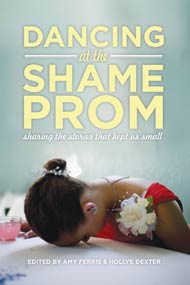
"The Jump Rope Line" by Marcia G. Yerman is included in the Seal Press anthology Dancing at the Shame Prom.
Published at: