Lilly Rivlin: Artist as Truth Seeker
Every era has its moments that are written and evaluated by “historians.” Creatives capture those same events through the prism of nuance, drama, and emotion. Lilly Rivlin, now 84, is one such artist. A...

Every era has its moments that are written and evaluated by “historians.” Creatives capture those same events through the prism of nuance, drama, and emotion. Lilly Rivlin, now 84, is one such artist. A...
Arcan was both appreciated and reviled. She was a finalist for the revered French literary awards, the Prix Médicis and the Prix Fémina. Perhaps the public couldn’t forgive her for living the life that she wrote about.
Reminiscent of two big movies of the late 1960s, “Isadora” and “Women In Love” — both made when the Women’s Movement was gaining traction — the film is a rich tapestry of history, emotion, and visual imagery.
Female vets must be recognized as contributing members of society, with valuable abilities and talents to bring into their communities.
Adriana Zavala, guest curator, qualified Kahlo’s home as an “extension of her personal cosmology,” saying, “There are still things to learn about Kahlo.”
The need for an ongoing “dual identity,” as a means of survival for the adult black male, is a theme that repeatedly manifests itself in Adams’s work.
“The work is a commentary on the age I have lived in. I am a documentarian, recording the critical moments of my life and those of society.”
Lee’s film yields a “complex and multilayered” account which she hopes will instruct her daughter, and future generations of girls, about the struggle that preceded them.
While his father’s side of the family inspired a progressive path for Shaw, his mother was aghast at his choice—at age 26—to travel to New York City to study with Stuart Davis.
It hasn’t exactly been a stellar start to 2012 for American women. Rick Santorum’s theory that birth control is “harmful to women” would have Margaret Sanger spinning in her grave. Then there was Fox...

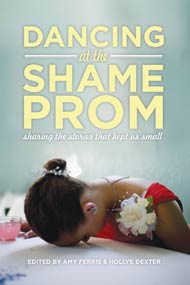
"The Jump Rope Line" by Marcia G. Yerman is included in the Seal Press anthology Dancing at the Shame Prom.
Published at: